How to Build a Band Setlist That Flows
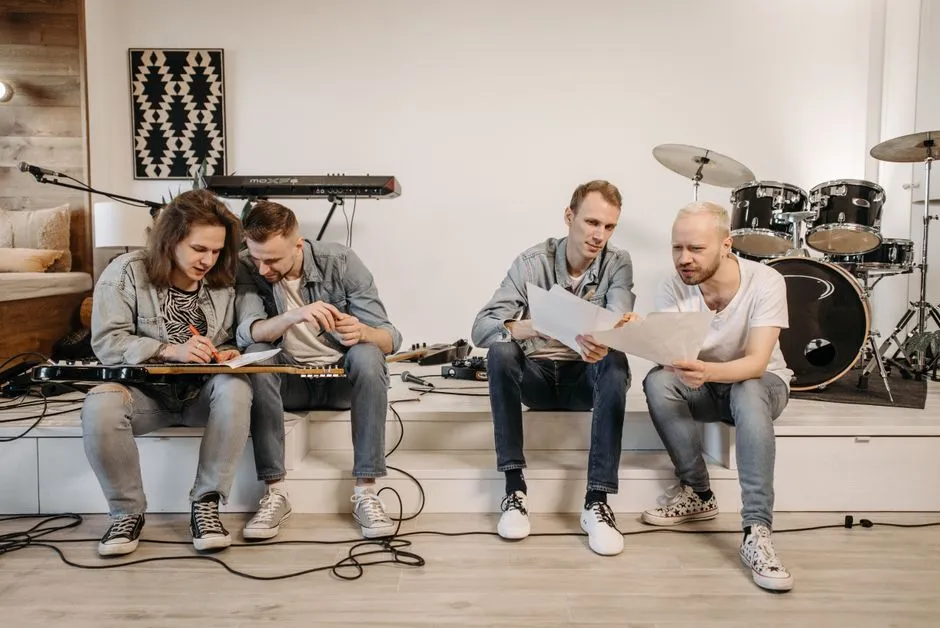
- Build the set around the room and the clock
- Write the constraints at the top
- Calculate the usable music time
- Choose a reliable opener
- Build in short runs, not a perfect arc
- Put changeovers where they do musical work
- Plan the last third for the band you will be then
- Print the information each person needs
- Rehearse the order without stopping
- Keep one cut and one substitute ready
- Review the set after the show
Build the set around the room and the clock
To make a band setlist, start with the confirmed performance length, subtract planned talking and changeovers, and choose only songs the band can currently perform. Open with something reliable, place contrast before the set becomes predictable, budget time for instrument or tuning changes, and finish with a song that still works when everyone is tired. Then rehearse the complete order without stopping and time what actually happens.
A setlist is not a ranking of the band's songs. It is a running order for a particular room on a particular night. The most beloved song can still be wrong for the opening slot if it begins with a two-minute equipment negotiation.
Write the constraints at the top
Before choosing songs, record:
- total stage time;
- whether that time includes setup, announcements, or an encore;
- a firm finish time;
- required breaks;
- venue or event restrictions;
- shared-backline and changeover limits;
- the available players and instruments;
- any accessibility, health, hearing, or stamina needs.
Confirm ambiguous timing with the organizer. "A 45-minute slot" may mean 45 minutes of music, or it may mean the next act must be ready to begin 45 minutes after you walk on. Those are different sets.
Use the shorter confirmed interpretation until the organizer clarifies. Running five minutes under can feel abrupt. Running five minutes over can take those minutes directly from another artist.
Calculate the usable music time
List the live duration of each song, not the studio-track length. Count the spoken introduction, extended ending, audience participation, count-in, and any transition that survives into performance.
For a hypothetical 45-minute slot:
| Item | Minutes |
|---|---|
| Spoken introduction | 1 |
| Eight songs averaging 4 minutes | 32 |
| Three planned transitions averaging 1 minute | 3 |
| One instrument change | 2 |
| Contingency | 4 |
| Planned total | 42 |
The arithmetic is 1 + 32 + 3 + 2 + 4 = 42 minutes. That leaves three minutes before the stated limit. The numbers are hypothetical, but the method is not: give every non-song moment a line instead of hoping it becomes invisible.
Avoid filling the full slot on paper. Applause, a slow cable change, or a count-in that needs to happen twice can spend the margin. The clock does not care that the bridge felt unusually meaningful.
Choose a reliable opener
The opener has several jobs. It confirms the room sound, establishes how the band enters, and gives the players a shared first cue. Choose a song the full band knows well and can start cleanly.
A useful opener usually has:
- an unmistakable count-in or entrance cue;
- no unusual instrument change before it;
- a range and intensity that work before the players are fully settled;
- a clear ending or transition into the next song;
- enough identity to tell the room what kind of set has begun.
"Start with the fastest song" is not a rule. Neither is "save the familiar one." Reliability comes first. Energy can rise after the first song. Confidence is harder to rebuild while someone is still looking for the correct patch.
Build in short runs, not a perfect arc
Think in groups of two or three songs. Within each group, make one transition especially clean. The transition might be immediate, connected by a spoken line, or separated by a necessary tuning change.
For every adjacent pair, ask:
- Who gives the next count-in?
- Does anyone change instrument, tuning, capo, patch, or position?
- Does the singer need to speak, drink water, or reset?
- Do both songs begin or end at nearly the same intensity?
- Is there a technical reason they cannot follow one another?
Contrast can come from tempo, density, lead voice, instrumentation, dynamics, or lyrical weight. Key alone does not dictate order. Two songs in the same key may flow beautifully. Two songs at the same apparent tempo may feel completely different. Listen to the transition instead of solving it from a spreadsheet.
The band feedback guide offers a way to describe what fails: name the exact transition, the audible effect, and one change to test.
Put changeovers where they do musical work
Instrument and tuning changes are not automatically dead time. They become dead time when nobody owns them.
Mark every change on the setlist. Decide whether another member speaks, begins an intro, holds a texture, or simply lets the room breathe. Keep the plan short and honest. A three-minute story designed to hide a 20-second guitar swap tends to outlive both the guitar swap and the goodwill it was protecting.
Do not rush equipment handling. Place instruments on stable stands, keep walkways clear, and follow equipment and venue instructions. Unfamiliar electrical faults, damaged cables, rigging, or unstable backline need the venue contact or a qualified technician.
If the change remains unreliable, move the songs together by instrument or remove one from this set. A running order is allowed to be practical.
Plan the last third for the band you will be then
The musicians near the end of the set are not identical to the musicians at soundcheck. Hands, voices, concentration, and hearing have done work.
Do not stack every physically demanding song at the end merely because a chart of imaginary excitement points upward. Place the most exposed vocal, difficult tuning, or fragile arrangement where the performer can deliver it consistently. The closer should feel conclusive, but it should also survive the full set that precedes it.
Mark any planned encore separately. Do not count on receiving one, and do not use an encore to disguise an overlong main set. If the venue approves an encore, know the exact song, starting cue, and time needed.
Print the information each person needs
One master order prevents version drift. Give every member the same song sequence and revision date. Add only performance-critical notes:
- count-in owner;
- starting pitch or cue;
- tuning, capo, patch, or instrument;
- special ending;
- transition instruction;
- speaking cue;
- planned break;
- hard finish time.
Keep the type large enough to read under stage light. Use page breaks that do not hide the next title. A setlist that requires a careful pinch-zoom during the count-in has found a new way to become percussion.
If different players need different notes, keep the song order identical and label the versions by role. Confirm changes in one shared place, not across six message threads whose final contribution is the word "sure."
Rehearse the order without stopping
An arrangement rehearsal fixes songs. A set rehearsal tests sequence, timing, transitions, physical load, and communication. You need both.
Use the run block in the 90-minute rehearsal plan to play the proposed set without conversational restarts. Record only with everyone's consent. One person tracks:
- actual start and finish;
- transition lengths;
- unclear cues;
- equipment changes that ran long;
- places where energy felt too uniform;
- speaking sections that lacked an owner;
- any point where a player needed a pause.
Review after the run. Fix the two or three failures that affect continuity most, then run those transitions again. Do not turn the final rehearsal into a constitutional convention about every song's emotional importance.
Keep one cut and one substitute ready
Mark the cleanest song to remove if time shrinks. The cut should not strand an instrument change, speaking setup, or transition that only makes sense with the missing song.
Also keep one substitute ready for a predictable problem: a singer needs less range, a technical setup fails, the room calls for a shorter finish, or an event request changes. The substitute must be genuinely performance-ready. An unrehearsed crowd favorite is not contingency planning. It is optimism wearing a familiar chorus.
Tell the whole band who can call the cut and how the signal will be given. Quiet contingency cues are much better than an onstage committee meeting.
Review the set after the show
Within a day, record what the audience cannot tell you directly:
- actual running time;
- transitions that held;
- changes that felt longer than planned;
- songs that exposed fatigue;
- technical notes tied to exact positions;
- the cut or substitute, if used;
- one ordering change to test next time.
Do not rebuild the full set from one difficult room. Separate execution problems from running-order problems. A missed entrance may need rehearsal. Three similar endings in a row may need resequencing. A silent audience may be listening, waiting, distracted, or simply silent. Observation comes before diagnosis.
The best setlist is not the one that looks most dramatic on paper. It is the one the band can execute, the clock can contain, and the room can follow from the first cue to the final stop.