How to Count In a Band: Beats, Pickups, and Cues
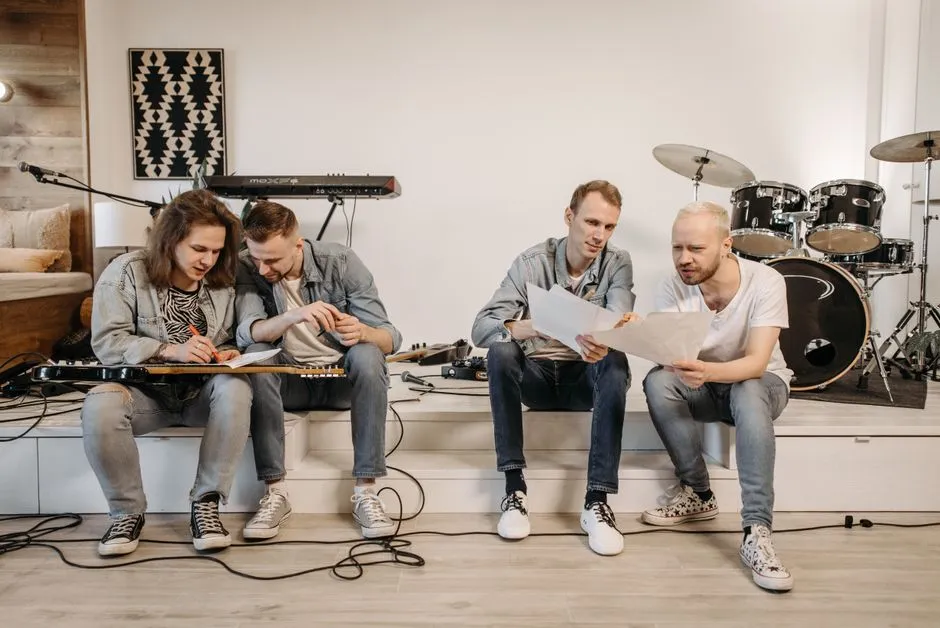
- How do you count in a band clearly?
- Which terms need separating?
- What should go on the opening cue card?
- What does one preparation bar mean in 4/4?
- Where does a one-beat pickup fit?
- How does the plan change in 3/4?
- Is a recording app's count-in the same as the musical pickup?
- How can the group check the cue without playing?
- Frequently asked questions
- Sources
How do you count in a band clearly?
To count in a band, agree on the arrangement, beat unit, tempo, count-in length, and each player's first entrance before giving the cue. Keep the preparation separate from any pickup notes belonging to the music. One person should lead an agreed cue that everyone can follow. This is a planning method, not an assessment of hearing safety, equipment, or performance readiness.
Which terms need separating?
For the simple meters used here, the Steps to Music Theory chapter on simple meters explains that a time signature identifies the number of beats in a measure and the note value receiving a beat. Tempo specifies the speed. A downbeat is the first beat of a measure.
Our examples use quarter-note beats: four per bar in 4/4, three per bar in 3/4. They do not supply a counting rule for every meter or musical style. A number such as 120 needs its note value stated; do not silently substitute a different pulse.
A pickup, also called an anacrusis, is musical material leading into the first downbeat. Foundations of Aural Skills explains that distinction: the beginning of the music need not be the first downbeat.
The practical distinction is simple: preparation tells the players when to start; a pickup is something the arrangement asks someone to play or sing. Do not erase the pickup by telling every player to wait for the first full bar.
What should go on the opening cue card?
Use this original editorial worksheet with authorized parts. It is not a standard notation system or a substitute for the music.
| Field | What to record |
|---|---|
| Reference | Song title, arrangement revision, and matching part references |
| Starting location | Opening or named restart point; include the actual chart's locator |
| Pulse | Meter, beat unit, and agreed tempo reference |
| Preparation | Who leads; how many preparation beats or bars; the agreed cue |
| Entrances | Who begins first, their exact position, and who waits until later |
| Confirmation | Who resolves unclear notes before this copy is issued |
For example, “opening, revision R2, leader gives one preparation bar” still leaves a question: does everybody enter together? Add the entrance positions rather than expecting each player to infer them from the leader's part.
Use the band song-map method to locate the passage within the larger arrangement. A song map handles structure; this smaller card handles the preparation immediately before an entrance. Keep the revision identifiers aligned.
Do not reproduce protected parts or distribute recordings without the necessary permissions. Writing a cue card does not establish ownership of an arrangement.
What does one preparation bar mean in 4/4?
Here is an original, fictional paper example: four quarter-note beats per bar, quarter note = 120, no pickup, and all players entering at the next downbeat. No band has been recorded or tested for this example.
One preparation bar is marked:
| Position | Preparation beat 1 | Preparation beat 2 | Preparation beat 3 | Preparation beat 4 | First full bar, beat 1 |
|---|---|---|---|---|---|
| Cue plan | Count 1 | Count 2 | Count 3 | Count 4 | Players enter |
The last preparation count is not the entrance itself. The next equally spaced beat is the entrance. On paper, mark both positions rather than placing “start” directly underneath the final 4.
The arithmetic helps reveal the spacing. At the stated 120 quarter-note beats per minute, a beat lasts 60 ÷ 120 = 0.5 seconds. Put preparation beat 1 at 0 seconds: the next counts fall at 0.5, 1.0, and 1.5 seconds, with the entrance at 2.0 seconds.
There are three intervals between the four spoken counts, then a fourth interval before the entrance. These are calculated coordinates for this example, not measured human timing, a tolerance standard, or a prescription to watch a stopwatch while playing.
A longer preparation can be agreed when useful. Label its length explicitly; “the usual count” is insufficient when a substitute or new arrangement changes what usual means.
Where does a one-beat pickup fit?
Change the fictional arrangement: now the lead part has one quarter-note pickup immediately before the first full bar. The other parts still enter on that bar's downbeat.
For this illustration, the group agrees on three spoken preparation counts followed by the pickup in the fourth beat position:
| Position before the first full bar | Beat 1 position | Beat 2 position | Beat 3 position | Beat 4 position | Next downbeat |
|---|---|---|---|---|---|
| Lead part | Wait | Wait | Wait | Play pickup | Continue into full bar |
| Other parts | Wait | Wait | Wait | Wait | Enter |
| Cue plan | Count 1 | Count 2 | Count 3 | Agreed pickup cue | First full bar begins |
This is our example's agreed convention, not a claim that every band must omit the spoken 4. Another ensemble may use a different verbal or visual cue. What must remain explicit is the lead part's earlier entrance.
With the same artificial time coordinates, the pickup begins at 1.5 seconds and the first full bar begins at 2.0 seconds. The pickup lasts one quarter-note beat, or 0.5 seconds in this example. It is not an extra full bar inserted after four preparation counts.
If the actual part has a different pickup length, this table no longer describes it. Consult the authorized notation and the arrangement's responsible musician. Do not squeeze several notes into this example's one-beat space simply because the table is convenient.
How does the plan change in 3/4?
Consider a separate fictional arrangement with no pickup, three quarter-note beats per bar, and the same quarter-note tempo of 120. Its one-bar preparation is “1, 2, 3,” followed by the entrance on the next 1.
At the stated pulse, preparation counts occur at 0, 0.5, and 1.0 seconds. The entrance falls at 1.5 seconds: 3 × 0.5. Adding a fourth equal count would no longer match the one-bar preparation described on this card.
Keep this example separate from the 4/4 version. The tempo reference stayed the same; the agreed number of preparation beats changed. For unfamiliar meters, free-time openings, or changing pulses, work through the actual arrangement with a qualified music teacher or the designated musical director rather than extending this table by guesswork.
Is a recording app's count-in the same as the musical pickup?
No. Treat the recording start and musical entrance as separate locations.
For a specific software example, the Ableton Live 12 recording manual says a non-None count-in finishes before recording begins. It describes the count-in display progressing through negative bar positions to 1.1.1, where recording starts. That explains the software's preparation, not where your arrangement's pickup belongs.
Do not place wanted pickup material before the recording start and assume it will be captured. Identify the intended capture start and musical reference together, using the application's current documentation and qualified help where needed. This is a planning distinction, not a tested session setup or a claim about every recording program.
Obtain the necessary permissions before recording or sharing. Follow venue and equipment instructions; unsafe or unfamiliar technical setups belong with qualified technicians.
How can the group check the cue without playing?
Trace the card silently against each authorized part. Ask each person to point to their first entrance and the shared downbeat. Resolve any mismatch before treating the card as agreed.
Use specific observations: “Your copy enters at the pickup; this card says everyone waits until the full bar.” That identifies a document conflict without deciding that somebody played badly. The band-feedback guide develops that distinction.
Record the decision in one revised card. Keep the ensemble-workflow notes with the corresponding arrangement, and mark an unresolved opening as unresolved. A clear document supports the next rehearsal; it does not prove that the music has been learned or that rehearsal conditions are safe.
Frequently asked questions
Must the drummer always give the count-in?
This worksheet does not assign leadership by instrument. Agree who supplies the preparation and make that role visible on the cue card. The person leading needs the same arrangement reference and entrance plan as everyone else. If the group has a musical director, resolve the role through that existing decision process.
Does everyone enter when the count-in ends?
Use the actual part, not an assumption that the entire ensemble starts together. In this article's pickup example, the lead part begins before the first full bar and the other parts enter on its downbeat. A different arrangement may specify later entrances. Record each relevant position rather than writing only “band starts.”
How many counts should I give?
Specify the preparation for the actual opening. Our no-pickup examples use one preparation bar, but that is an editorial example rather than a universal requirement. Agree the length, cue leader, and entrance positions with the group, then write them down. If a change is needed, issue it to everyone before using the revised card.
Is a pickup an extra bar before bar 1?
A pickup is musical material before the first downbeat, not automatically another complete bar. This article's fictional pickup lasts one quarter-note beat. Its notation and numbering should follow the actual authorized chart. Do not renumber a source or add a full bar simply to make its opening resemble the no-pickup example.
Can the cue card replace a rehearsal?
No. A silent check establishes whether documents describe the same opening; it does not establish musical execution, hearing safety, or suitable equipment conditions. Use the card alongside the actual parts and the group's rehearsal process. Stop when conditions are unsafe and refer technical concerns to qualified help rather than treating a clear count-in as clearance.